


In the pursuit of personal and professional growth, setting goals is akin to charting a course toward a desired destination. However, the mere act of setting goals isn’t enough; they need to be intelligently crafted to ensure they are achievable and impactful. This article delves into the concept of SMART goals—a systematic approach that transforms aspirations into actionable plans.
Unpacking SMART Goals: An Overview
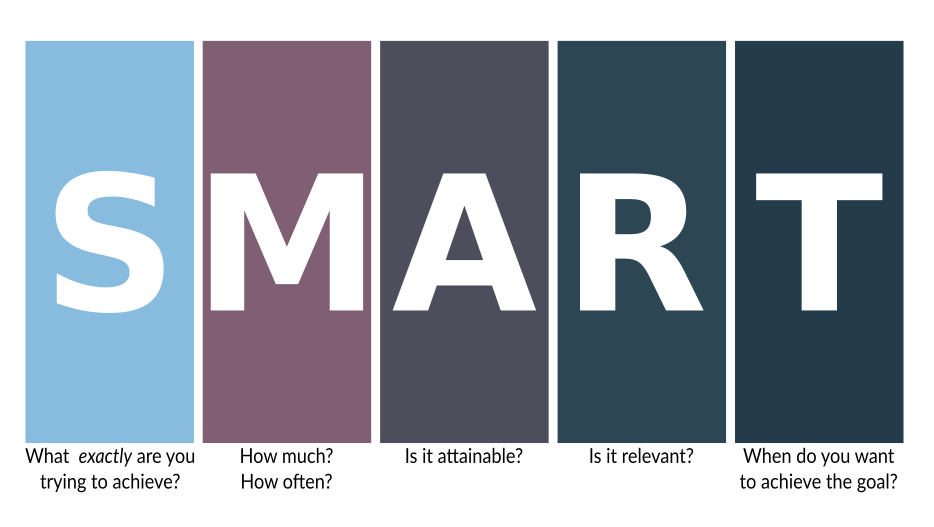
The SMART framework is an acrostic that encapsulates five critical characteristics that goals should embody: Specific, Measurable, Achievable, Relevant, and Time-bound. These criteria create a structured foundation that elevates goals from vague desires to well-defined objectives with a clear path to attainment. Each facet of the SMART framework contributes to the overall efficacy of the goal-setting process.
Specific Goals: The Power of Precision
A vague goal lacks direction and clarity. Specificity narrows the focus, offering a detailed description of what is to be achieved. A specific goal answers the crucial “what,” “why,” and “how” questions. By pinpointing the exact outcome, you provide a roadmap for action and a clear mental image of success. For instance, transforming the nebulous goal of “improving fitness” into “running a 5k race within six months” injects precision and purpose.
Measurable Goals: Tracking Progress and Success
Measuring progress is essential for staying motivated and gauging success. A goal should be quantifiable, enabling you to track advancements over time. Incorporating measurable aspects ensures you have a tangible way to assess how far you’ve come. Consider the distinction between the vague aim of “learning a new language” and the measurable goal of “holding a five-minute conversation in Spanish with a native speaker within three months.”
Achievable Goals: Balancing Ambition and Realism
While aiming high is commendable, setting unattainable goals can lead to frustration and disillusionment. An achievable goal acknowledges your current resources and capabilities while pushing you slightly beyond your comfort zone. It strikes a balance between ambition and realism, motivating you without overwhelming you. Transforming “becoming a world-renowned pianist in six months” into “playing a complex classical piece fluently within a year” aligns aspiration with feasibility.
Relevant Goals: Aligning with Purpose
Goals should be relevant to your overarching objectives and values. They should resonate with your aspirations, both short-term and long-term. A relevant goal contributes to your growth and brings you closer to your desired outcome. Evaluating whether a goal is in sync with your larger vision is essential. For example, prioritizing “earning a certification in digital marketing to advance my career” resonates with professional growth and aligns with broader ambitions.
Time-bound Goals: Anchoring in Timeframes
A goal without a timeframe lacks urgency and accountability. Assigning a specific time frame creates a sense of structure and prompts you to allocate resources efficiently. Time-bound goals establish milestones and deadlines, fostering a commitment to consistent action. Shifting from “writing a book someday” to “completing the first draft of my novel by the end of this year” imbues the goal with a sense of immediacy.
Achieving Success through SMART Goals
The SMART framework is not a mere collection of criteria; it’s a methodology that transforms aspirations into reality. By intertwining specificity, measurability, achievability, relevance, and time-bound parameters, SMART goals become actionable roadmaps that guide you toward achievement. These criteria function synergistically, each contributing to the overall effectiveness of the goal-setting process.
Incorporating the SMART approach into your goal-setting ritual amplifies your likelihood of success. It bridges the gap between intention and action, replacing abstract dreams with concrete plans. SMART goals hold you accountable, offering a tangible measuring stick for progress and accomplishment. As you embark on your journey of growth and achievement, remember that setting SMART goals isn’t just a strategy—it’s a philosophy that empowers you to navigate the path toward your aspirations with intention, clarity, and purpose.
[convertkit form=5650925]